- TVCs built for broadcast and mass reach
- DVCs built for digital platforms and their specific viewing behaviour
- Brand films, product films, and longer-form video content
- Cutdowns and platform-specific edits so one shoot works across every format it needs to
TVC, DVC & Video Films
A film is the most expensive way to say the wrong thing, and the most effective way to say the right one. At Admatazz, every TVC, DVC, or brand film is built to be recognised in the first three seconds and remembered long after the media spend behind it runs out, not just admired in the edit suite.
01
What this covers
02
What makes a film work, in our view
A TVC and a DVC are not the same film shown on different screens. A TVC has to earn attention in a room full of distractions, on a channel the viewer didn't choose to be on. A DVC has to earn it in the first second of a feed, before a thumb decides to keep scrolling.
We plan for that difference at the script stage, not just at the edit, so neither version feels like a compromise of the other.
Every film is also built around the brand's distinctive assets, so it's recognisable as the brand's even with the sound off and the logo cropped out. That's the difference between a film that performs once during its media flight, and one that keeps paying off every time a fragment of it resurfaces in a cutdown, a meme, or someone's memory.
03
Our production network
The idea, the script, and the creative direction are always built in-house at Admatazz. Nobody outside the agency decides what the film is trying to say. But making it look and sound the way it needs to often calls for specific craft, a director suited to the tone, a DOP who shoots a certain way, an editor or colourist with a particular sensibility.
For that, we draw on a network of production partners, directors, DOPs, editors, and colour grade artists across the world, and put together the team that actually fits the project, rather than defaulting to the same crew regardless of brief or budget.
04
AI in ad film making
We use AI the way a good editor uses a new lens, to do the craft better, not to replace the craft. That's shown up as fully AI-generated films, hybrid productions that mix live shoot with AI-built sequences, and AI woven into the workflow itself, from pre-visualisation to faster iteration on cuts and versions.
What we don't do is sell AI as a service in its own right. The moment AI becomes the pitch instead of the tool, the output tends to get worse, not better. For us, it stays exactly what a camera or an edit suite is: a tool that makes the work faster and occasionally makes something possible that wasn't before. The film still has to earn its three seconds either way.
05
Our approach

Script and direction
built in-house, around a single idea the brand can own, not a list of product features

Plan for format
TVC, DVC, and cutdowns designed from the shoot itself, not improvised in the edit

Assemble the right team
The director, DOP, editor, and colourist matched to what this specific project needs

Produce
with the craft a broadcast-quality film demands, using AI wherever it genuinely helps that craft
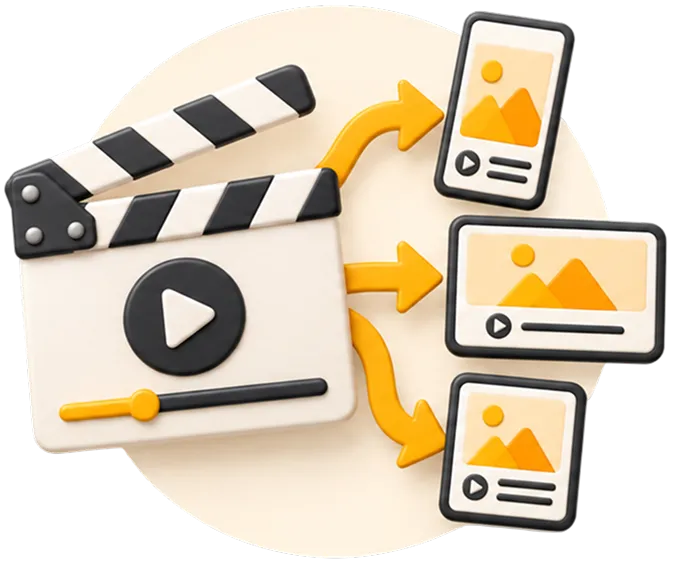
Extend
the film into the cutdowns and formats it needs to travel across, planned in advance, not patched together after
06
Who this is for
Brands with a launch, a campaign moment, or a repositioning that needs a hero film to anchor it. Brands that have been making digital-only content and are ready to invest in a broadcast-quality piece. Brands that want access to world-class production talent without building that network themselves. Brands curious about AI-made or AI-assisted film but wary of it looking cheap or generic if handled without craft behind it.
07
F.A.Qs
That's always in-house at Admatazz.Production partners are brought in for craft and execution, not for deciding what the film says or how it's directed creatively.
No. The director, DOP, editor, and colourist are chosen based on the project's size, budget, and brief, drawn from a network of partners rather than one fixed in-house crew.
A TVC is built for broadcast and mass-reach viewing, where attention is passive. A DVC is built for digital platforms, where attention has to be earned in the first second before someone scrolls past.
No. AI is used inside our production process to enhance craft and speed, not sold as a separate offering. Treating AI as the product, rather than a tool inside a proper production, is usually what makes AI-made films look cheap.
Yes, alongside hybrid productions that combine live shoot with AI-generated sequences, depending on what the film actually needs.